


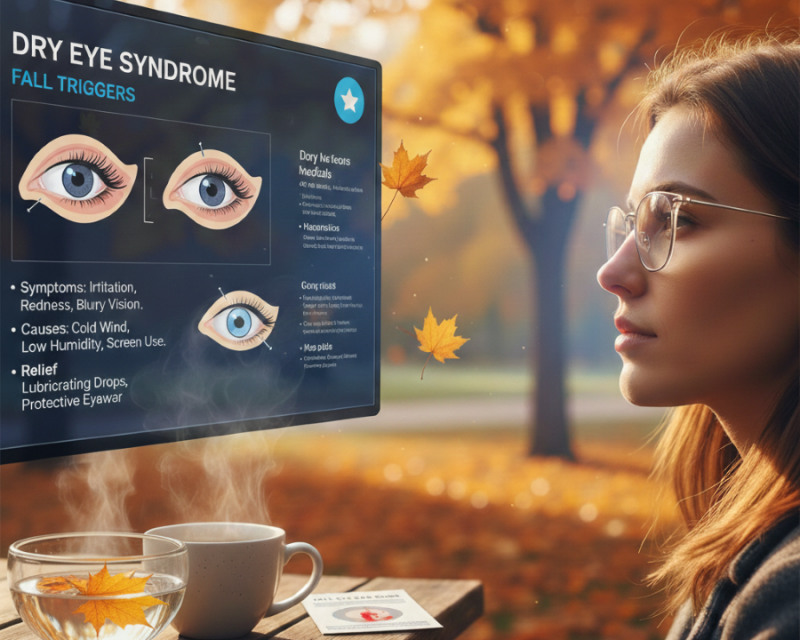
Autumn is one of those seasons that feels magical: the trees glow in fiery reds and golds, the air is crisp and fresh, and it’s the perfect time to take a slow, relaxing walk outside. But if you live with dry eye syndrome, this beautiful season can come with its own challenges. Your eyes might feel dry, tired, or irritated more often than you’d like. Even simple things like stepping outdoors for a few minutes or working on your computer for a couple of hours can leave your eyes feeling uncomfortable and a little irritated.
As the evenings get colder and the air becomes drier, our eyes start losing moisture faster than usual. The tear film, a thin, protective layer covering the surface of your eyes, keeps them hydrated and comfortable. But autumn winds, chilly air, and dry indoor heating can weaken this natural shield. When that happens, your eyes may feel scratchy, irritated, or unusually tired. You might notice itching, mild burning, tension, or even temporary blurred vision during the day or after long screen sessions.
The air becomes drier
Cold air simply holds less moisture, so your tear film evaporates faster. Add a gusty wind, and your eyes can feel dry and irritated within minutes. Many people describe this as a gritty, sandy feeling. Understanding this can help you take small, preventative steps, like wearing protective glasses outdoors or using lubricating eye drops before leaving the house. Even stepping outside for a few moments on a windy day can make a difference if you’re mindful of protecting your eyes.
Heating at home has its effect
During autumn, we naturally spend more time indoors. But heaters dry out the air, which can make eyes feel even more uncomfortable. If your eyes are feeling dry, itchy, or tired at home, there are some easy little changes that can really help. Try using a humidifier to keep the air nice and moist and avoid having warm air from heaters blowing straight onto your face. These small, simple changes can make your eyes feel a lot more comfortable and relaxed throughout the day. These tiny adjustments support your eyes’ natural defenses, help maintain hydration, and reduce the intensity of dry eye syndrome symptoms.
Cold–Hot Transitions
Have you ever stepped off a chilly street into a warm room and immediately felt your eyes react? For anyone prone to dry eye syndrome, repeated exposure can make discomfort worse over time. Small habits can make a big difference for your eyes. Simply remembering to blink more often or putting on protective glasses when the seasons change can help your eyes feel more comfortable. Even taking a moment to pause and letting your eyes rest, or giving them a few intentional blinks as you move between warm and cold environments, can help your tear film recover faster and keep your eyes feeling fresh.
Longer Time in Front of the Computer
Autumn can get busy quickly: school assignments, work deadlines, and seasonal projects all pile up, and before you know it, you’re staring at a screen for hours. When that happens, we tend to blink less, and our eyes don’t get the chance to spread moisture evenly. The result? They feel dry, heavy, tired, or sometimes even blurry for short periods. But here’s the good news: small, mindful habits can make a world of difference. Taking short breaks, consciously blinking, and following simple self-care routines help keep your eyes refreshed and reduce the risk of worsening dry eye syndrome symptoms.
Modern Approaches to the Assessment and Management of Dry Eye Syndrome
This section only provides a general overview, not self-treatment recommendations. Approaches to the management of dry eye syndrome depend on the needs of the individual and should only be performed by a specialist.
Tear Film Assessment
Modern devices allow specialists to measure the stability of your tear film, the rate of evaporation, and the condition of the glands. This helps to uncover the true cause of dry eyes and ensures that any treatment is specifically tailored to your needs.
Long-Lasting Eye Moisturizers
A specialist can recommend options that remain on the surface of the eye longer, depending on individual needs. Gels, ointments, or specially formulated eye drops can provide hydration, reduce irritation, and support your natural tear film, helping you feel comfortable for hours.
Quick-Acting Ways to Keep Your Eyes Moist and Comfortable
Some simple tricks can help your eyes stay hydrated and comfortable all day long. For example, wearing protective glasses can block chilly winds from irritating your eyes, while lubricating drops give instant moisture without making your vision blurry. These small steps can make a noticeable difference, keeping your eyes feeling fresh, relaxed, and happy no matter what your day throws at them.
When to See a Specialist
- if symptoms are frequent
- if they interfere with work or concentration
- if they are not relieved by general self-care
A specialist can determine the true cause of discomfort and recommend the most effective approach. By understanding the causes, paying attention to early symptoms, and following basic self-care tips, you can enjoy the season with eyes that feel calm and healthy. A professional evaluation is always a safe, reliable step if discomfort persists.


