


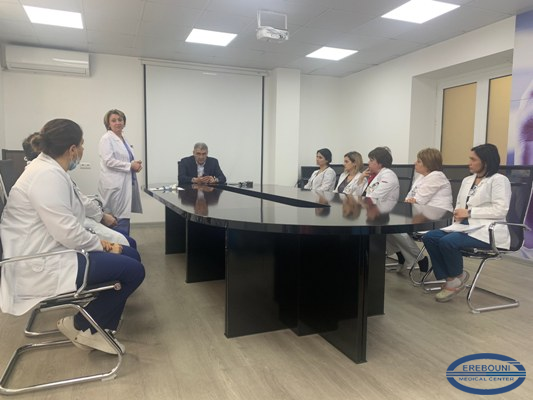
A regular scientific conference was held at Erebuni MC, this time dedicated to modern approaches in the prevention and treatment of osteoporosis.
Osteoporosis is a chronic, progressive systemic disease of the skeleton, characterized by reduced bone mineral density, impaired microarchitecture, and an increased risk of fractures.
Osteoporosis is classified into primary and secondary types.
Primary osteoporosis develops in postmenopausal women, as well as in elderly individuals of both sexes.
Secondary osteoporosis develops as a result of various diseases and conditions, as well as due to certain medications.
During the conference, rheumatologist Alisa Kirakosyan presented to colleagues the causes of primary and secondary osteoporosis, emphasizing the importance of recognizing and diagnosing secondary osteoporosis. Almost all subspecialists encounter cases of secondary osteoporosis, making awareness and application of modern diagnostic and treatment methods essential.
Head of the Densitometry Service, Narine Aslanyan, highlighted that the most reliable method for diagnosing osteoporosis is X-ray densitometry. This examination makes it possible to accurately assess bone mineral density, which is crucial for osteoporosis prevention and for evaluating the effectiveness of anti-osteoporotic therapy. The X-ray osteodensitometry service at Erebuni MC is equipped with state-of-the-art technology.
Endocrinologists, cardiologist-pulmonologists, nephrologists, gynecologists, and traumatologists attending the conference discussed current guidelines for the prevention and treatment of osteoporosis. Special attention was given to conditions that may be associated with osteoporosis, as well as to identifying individuals at higher risk. Densitometry is recommended for women with early menopause, women over 50, men over 65, and in any endocrine pathology, given the key role of hormones in calcium metabolism.


