


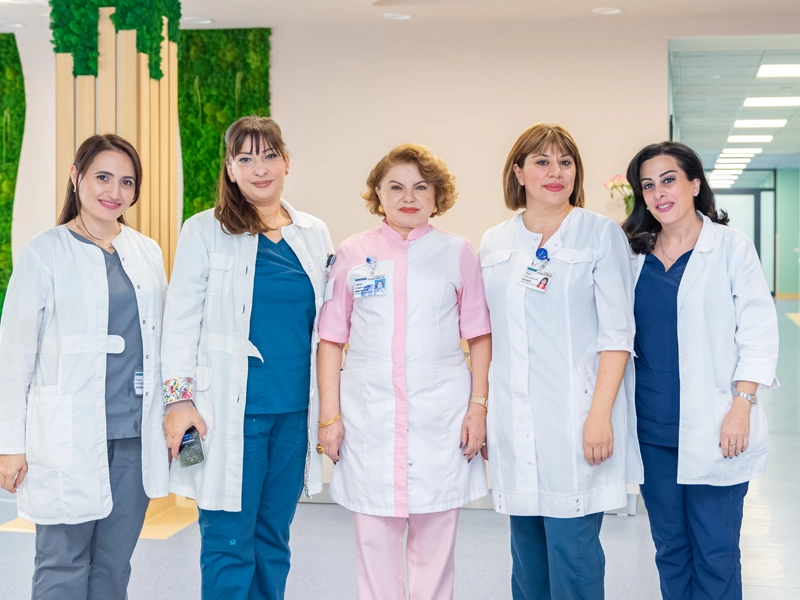
The Department of Gastroenterology and Hepatology of Erebouni Medical Centre implements the diagnostics and the treatment of digestive system and liver diseases.
Esophageal diseases
- Gastroesophageal reflux disease
- Esophagitis Differential
- Barrett's esophagus
- Cardiospasm
- Esophagospasm
- Stomach diseases,Acute and chronic gastritis
Ulcer diseases
- Gastric and duodenal ulcers
- Inflammatory bowel diseases, Nonspecific ulcerative colitis
- Crohn's disease
- Small intestine diseases- enteritis, Whipple disease
Liver diseases
- Hepatitis – viral, alcoholic, non-alcoholic or fatty liver, autoimmune and drug induced
- Cirrhosis differential
- Pancreatitis, Chronic pancreatitis
- Autoimmune pancreatitis
- Bile Duct Diseases – chronic cholecystitis, cholangitis, etc.
The fact, that digestive system and liver diseases often become chronic, deserves special attention, as well as contribute to the emergence of allergic reactions, many skin diseases, joints, endocrine system and the occurrence of food intolerance. This can have a significant impact on quality of life, reducing the working capacities up to causing depression, leading to the occurrence of cholelithiasis and urolithiasis, diabetes and other diseases.
Therefore, it is necessary and important timely begin treatment of patients by specialists. The earlier treatment is started, the more effective it is that makes it possible to avoid the recurrence of the disease in the future.
Indications for patients to apply to specialized consultation and treatment of gastroenterologist are:
- Heartburn, nausea, vomiting, bitter taste and dryness in the mouth
- Presence of abdominal pains
- Appetite loss
- Weight loss
- Intestinal disorders (diarrhea, constipation, bloating, sense of discomfort in the lower parts of abdomen, pain and anal itching)
- Noticeable changes in color of skin and mucous membranes, yellowness
During inpatient treatment of gastroenterological diseases the diet therapy and drug therapy in specific disorders are used. On the basis of the individual characteristics of the human body and the results of all diagnostics tests an individual treatment schedule is developed for each patient in which the daily routine, lifestyle and dietary patterns are taken into consideration.In its diagnostic and treatment activities the department of gastroenterology is working closely with specialists from other specialized departments of MC Erebouni: endoscopy, general and abdominal surgery, endocrinology, minimally invasive surgery, and others. In case, if during diagnostic examination of the patients are revealed the situation or disease which requires surgical correction and treatment (e.g. cholelithiasis or a peptic ulcer), patients are transferred to the appropriate department, where they undergo highly qualified surgical treatment, such as open or minimally invasive or laparoscopic surgery.
Phone number of Gastroenterology and Hepatology Department: 015 472318
Price list
Allergen determination
40,000
Esophagogastroduodenoscopy (EGD)
20,000
Esophagogastroduodenoscopy (EGD) with intravenous anesthesia
40,000
Esophagogastroduodenoscopy (EGD) with intravenous anesthesia and Helicobacter pylori detection
45,000
Rectosigmoidoscopy (RS)
20,000
Colonoscopy
25,000
Colonoscopy with anesthesia
50,000
Gastroduodenoscopy (GDS) with video endoscope
20,000
Total colonoscopy without anesthesia
25,000
Total colonoscopy without anesthesia, using CO₂ insufflation
35,000
Detection of Helicobacter pylori by biopsy method
5,000
Bronchoalveolar lavage (BAL)
25,000
Tips before a medical examination
The department is equipped with a modern endoscope of the Japanese PENTAX medical company, which enables it to carry out the examinations of stomach and intestinal tract painlessly and without any difficulties. And in case of tumor detection, it is possible to perform surgery at the time of examination. The department is equipped with an endoscopic ultrasound system of the latest generation. The latest diagnostic device of the Japanese company Hitachi allows you to combine endoscopic examination with ultrasound diagnostics, obtaining an ultra-precise image with minimally invasive intervention. Endoscopic ultrasound diagnostics in modern medicine is considered the leading diagnostic method for lesions of the pancreas, liver, bile ducts and oncological diseases.
Preparation for Gastroscopy
On the evening prior to the examination, dinner may consist of mashed potatoes or steamed broccoli.
It is advisable to discontinue the consumption of alcoholic beverages before the procedure.
- The last meal must be taken no later than 6:00 PM on the previous day.
- Dinner should be sufficient but must not include heavy or difficult-to-digest foods.
- No food or beverages should be consumed prior to the examination.
- A small amount of water may be taken no later than 2–4 hours before the procedure.
- The intake of medications in capsule or tablet form should be postponed unless otherwise instructed by your physician.
If you have a history of allergies, particularly to medications, you must inform your physician in advance.
If you have previously undergone related examinations or received inpatient treatment, it is advisable to present the discharge summaries and corresponding test results.
If the examination is to be performed within the framework of the Universal Health Insurance system or any other program, reimbursement must be pre-approved by the relevant department. Otherwise, the examination may be carried out on a paid basis only.
The department is equipped with a modern endoscope of the Japanese PENTAX medical company, which enables it to carry out the examinations of stomach and intestinal tract painlessly and without any difficulties. And in case of tumor detection, it is possible to perform surgery at the time of examination. The department is equipped with an endoscopic ultrasound system of the latest generation. The latest diagnostic device of the Japanese company Hitachi allows you to combine endoscopic examination with ultrasound diagnostics, obtaining an ultra-precise image with minimally invasive intervention. Endoscopic ultrasound diagnostics in modern medicine is considered the leading diagnostic method for lesions of the pancreas, liver, bile ducts and oncological diseases.
Dietary Recommendations 2–3 Days Prior to the Examination
It is advisable to follow the dietary guidelines below in the 2–3 days preceding the examination.
Permitted Foods (Protein-Based):
- Steamed meat and poultry (excluding smoked products)
- Lean fish
- Low-fat dairy products
- Eggs
- Sugar and honey
- Fruit jelly
Permitted Liquids:
- Clear liquids
- Strained broth
- Water, tea, non-alcoholic beverages
- Coffee (without milk)
- Natural juice without pulp or berries
Prohibited Foods
All plant-based foods are prohibited, including:
- Vegetables
- Fruits
- Berries
- Greens
- Legumes
- Nuts
- Porridges
- Bakery products
The following are also prohibited:
- Colored juices
- Alcoholic beverages
- Carbonated drinks
Before the examination, thorough bowel cleansing is required. The medication regimen and specific preparation instructions must be clarified with the attending physician.
If the examination is to be performed within the framework of the Universal Health Insurance system or another program, reimbursement must be pre-approved by the relevant department. Otherwise, the examination may be carried out on a paid basis only.


